Why security cannot be an afterthought on corporate devices
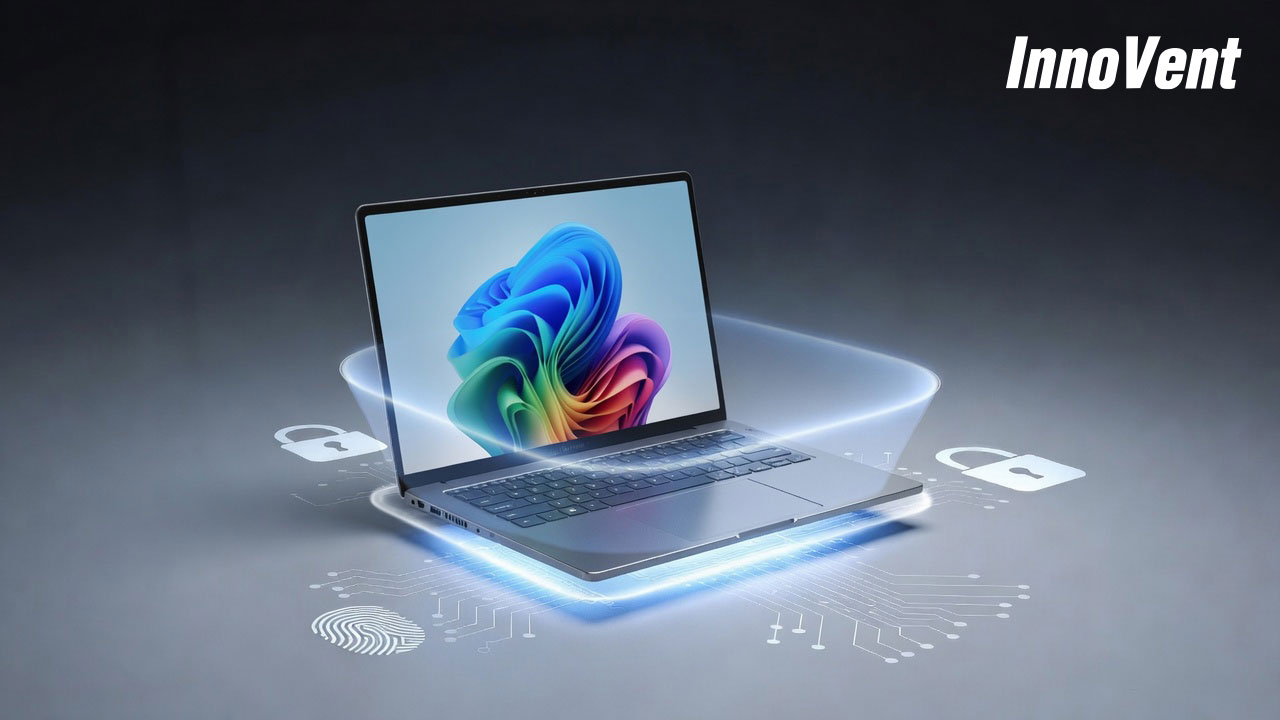
In a hybrid working world, your laptop is your perimeter. Most devices were not built with that reality in mind. Here is what hardware-level security actually means for a managed corporate fleet.
The perimeter has moved
A decade ago, enterprise security was largely a network problem. Organisations invested in firewalls, monitored traffic at the boundary, and managed risk through infrastructure. The device mattered, but the perimeter around it mattered more.
That model has not survived the shift to hybrid working. When users operate from home offices, client sites, hotels, and coffee shops, the network perimeter dissolves. The laptop becomes the boundary. What runs on it, what connects to it, and how it authenticates users and protects data are now the primary lines of defence in most enterprise security architectures.
Most corporate laptops were not designed with that reality in mind. They are consumer-derived devices with enterprise management software layered on top. Security is something that happens around them, not within them.
The Samsung Galaxy Book 6 Enterprise takes a different approach. Security is not added on. It is built in, at the hardware level, from the ground up.
Hardware-level protection: what it means in practice
The distinction between hardware-level security and software-layer security matters more than most procurement conversations acknowledge. Software security tools protect a device from the outside in. Hardware security protects from the inside out, addressing threats that software solutions are structurally unable to reach.
The Galaxy Book 6 Enterprise includes a discrete Trusted Platform Module, a dedicated security chip that manages cryptographic keys, certificates, and secure boot verification independently of the main processor. Even if the operating system is compromised, the TPM retains its integrity. It is the kind of protection that matters when a device is lost or stolen, when a user connects to a compromised network, or when an attacker gains partial access to a system.
Samsung Knox adds a further layer. Knox is Samsung's enterprise security platform, built into the hardware of every Galaxy Book 6 Enterprise. It provides a trusted execution environment that isolates sensitive business data from the rest of the device, enables remote wipe and lock capabilities, and supports defence-in-depth security policies through integration with mobile device management platforms. Knox aligns with NIST security frameworks used across regulated sectors, which means it maps to the compliance standards that enterprise IT teams already manage against.
Biometric authentication completes the identity layer. The Galaxy Book 6 Enterprise includes both a fingerprint sensor and an IR camera for facial recognition, supporting Windows Hello for Business. These are not convenience features. They are the authentication mechanisms that replace shared passwords, reduce credential exposure, and make phishing-based credential theft substantially harder to execute at scale.
The cost of security incidents that do not make the headline
When organisations calculate the cost of a security incident, they tend to focus on visible outcomes: the ransom payment, the regulatory fine, the customer notification exercise. These numbers are real, but they represent a fraction of the actual cost.
The larger cost is operational. An endpoint compromise triggers an incident response process that typically takes IT teams days or weeks to work through. Affected users lose access to their primary working environment. Data may need to be recovered from backup. Devices may need to be wiped and reimaged. Every step in that process has a direct cost in staff time and a less visible cost in the productivity of users who are affected.
For organisations running Windows fleets, the question is not whether to invest in endpoint security. It is how to reduce incident frequency and response cost per incident. Devices with hardware-level security built in, managed through Samsung Knox and deployed to a NIST-aligned standard, give IT teams a more defensible baseline from the outset.
Security posture and the managed fleet
Enterprise security is only as strong as the weakest device in the fleet. A single unpatched endpoint, a single compromised credential, a single device without full disk encryption can undermine the investment made across the rest of the estate.
The Galaxy Book 6 Enterprise is built for the managed fleet model. Samsung Knox Manage integrates with Microsoft Intune and other major MDM platforms, giving IT teams centralised security policy enforcement and compliance monitoring across the entire deployment. Devices arrive configured and enrolled, not requiring manual intervention before they meet the security baseline.
For IT teams responsible for maintaining security posture across a large, geographically distributed workforce, that integration is not a nice-to-have. It is the operational requirement that makes fleet-level security management achievable without proportional headcount.
Making the security case to procurement
Security is consistently cited as a board-level priority. It is less consistently factored into device procurement decisions, where the conversation tends to default to specification, price, and compatibility. That gap matters. A device fleet that is cheap to procure but expensive to secure, and expensive to recover from when incidents occur, is not the cost-effective choice the headline lease figures suggest.
- Specify the security baseline your organisation requires and verify that candidate devices meet it at the hardware level, not just through software overlay
- Include MDM integration compatibility as a procurement requirement, not a post-deployment consideration
- Estimate IT overhead per device for security management and incident response across each platform under evaluation
- Factor Knox and TPM capabilities into your risk reduction model alongside the lease cost comparison
- Ask your leasing partner whether devices are supplied pre-configured to your security standard, or whether that configuration sits at your cost after delivery
InnoVent supplies the Samsung Galaxy Book 6 Enterprise on managed lease terms, with configuration and deployment support that includes security baseline setup as part of the service. If you would like to understand what a Built for Business deployment looks like for your organisation, speak to our team.
Related Blogs

Why More Law Firms Are Taking a Fresh Look at Premium Business Laptops
For many law firms, choosing a laptop isn't simply about specifications. It's about providing fee earners and partners with a device that feels premium, performs consistently throughout the working day, and integrates seamlessly with the technology they rely on.
One ecosystem, zero friction
Your team already uses Samsung phones. What if their laptop worked seamlessly with them? Here is what the connected Samsung workplace actually looks like in practice.

AI at work: beyond the buzzword
Every device vendor says AI now. But what does on-device AI actually do for a corporate workforce on a Tuesday afternoon? Here is the honest answer for the Samsung Galaxy Book 6 Enterprise.