AI at work: beyond the buzzword
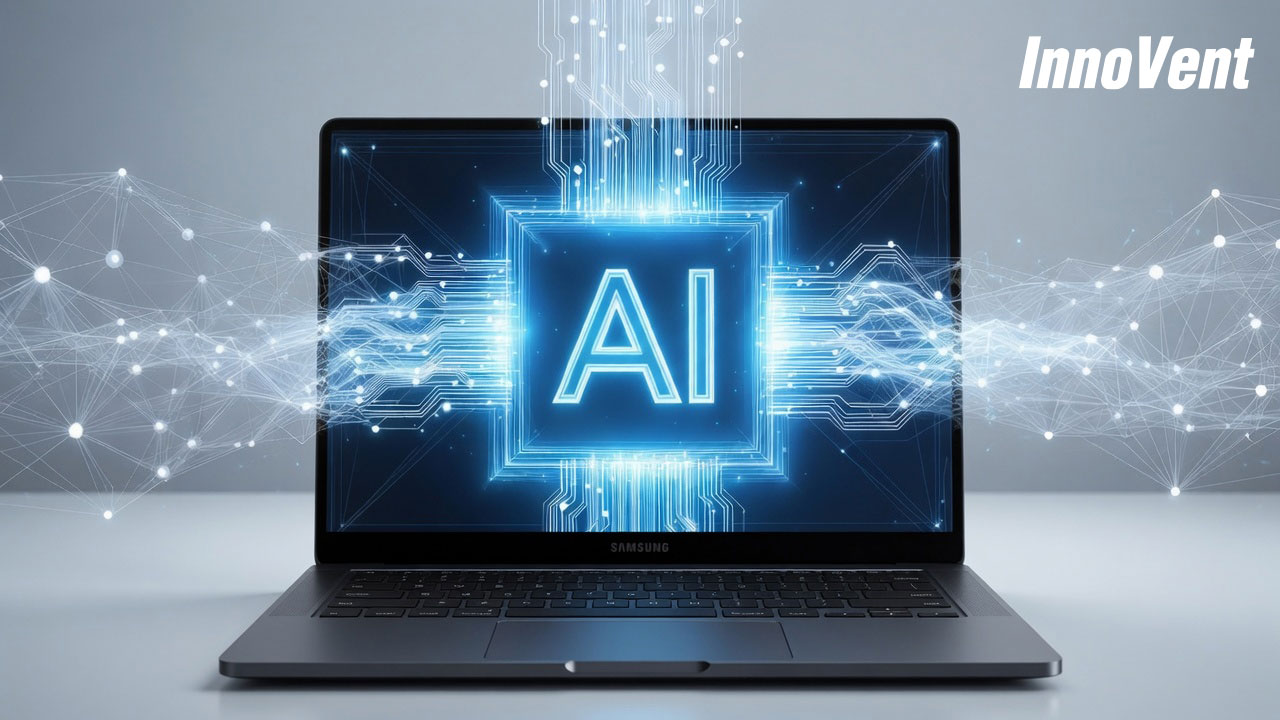
Every device vendor says AI now. But what does on-device AI actually do for a corporate workforce on a Tuesday afternoon? Here is the honest answer for the Samsung Galaxy Book 6 Enterprise.
The AI specification problem
Artificial intelligence has become the default marketing language of the device industry. Every laptop launched in the past eighteen months claims AI capabilities. The result is a landscape in which AI appears everywhere and means very little without further interrogation.
The questions that matter for enterprise procurement are more specific. What does the AI capability actually do in the applications the workforce uses every day? Is it running on the device or in the cloud, and what does that mean for data privacy and compliance? Does it reduce friction in real workflows, or add complexity to simple ones? And does the hardware genuinely support the processing demand, or is the specification claim ahead of the real-world performance?
The Galaxy Book 6 Enterprise has clear answers to each of these questions.
On-device AI and why the distinction matters
Most AI features in enterprise software run in the cloud. The user's input is sent to a remote server, processed, and returned. This is efficient for the device, but introduces latency, requires a reliable internet connection, and means the data being processed leaves the local environment. For routine tasks those trade-offs are generally acceptable. For sensitive business data, they are an information governance question that enterprise IT teams need to answer.
On-device AI runs the processing locally. The data does not leave the machine. The capability works without a network connection. And the response time is determined by the device's processing capacity, not server load or network latency. For professionals working with confidential client information, commercially sensitive data, or content subject to regulatory protection, on-device processing is a meaningful governance advantage, not a technical detail.
The Galaxy Book 6 Enterprise includes a dedicated Neural Processing Unit delivering up to 49 TOPS of on-device AI performance. The NPU handles AI workloads without drawing on the CPU or GPU, which means AI features run efficiently in the background without degrading the performance of the applications the user is actually working in.
AI features that solve real problems
Specification claims are a starting point. What they do not tell you is whether the AI capabilities translate into something that changes how people work. On the Galaxy Book 6 Enterprise, three features are worth examining for their practical value to an enterprise workforce.
Note Assist addresses one of the most consistent inefficiencies in modern professional life: meeting notes. Most senior professionals attend several meetings a week, take notes in each one, and then spend additional time turning those notes into actions, summaries, and communications for colleagues who were not present. Note Assist automates the summarisation and structuring of meeting content, producing a formatted output that can be shared directly. The time saving per meeting is modest. Across a year of meetings for a team of twenty, it is material.
AI Select extends the AI capability into content users encounter rather than create. When a user highlights text or an image on screen, AI Select provides contextual options: translation, explanation, search, and related action suggestions. For teams working across languages or dealing with technical content outside their core expertise, this is a genuine productivity tool rather than a demonstration feature.
Intelligent Search changes the way users find content on their own device. Rather than relying on exact file names or folder structures, it allows users to describe what they are looking for in natural language. For users managing large volumes of files across multiple client projects and workstreams, this reduces the time spent locating content before the actual work can begin.
AI and the managed enterprise environment
Enterprise IT teams have a legitimate concern about AI features that is separate from their productivity value: governance and control. AI tools that process data in ways that are opaque, or that create outputs used without verification, can introduce risks that outweigh their benefits.
The Galaxy Book 6 Enterprise is designed for managed deployment. Samsung Knox provides IT administrators with the policy controls needed to manage AI features at a fleet level. Individual AI capabilities can be enabled, restricted, or configured according to the organisation's information governance requirements. IT teams are not choosing between productivity benefits and compliance requirements. They are managing both through the same platform they already use for device management.
For regulated industries - legal, financial services, healthcare, government-adjacent organisations - this level of control is the prerequisite for deploying AI capability at all. Devices that provide AI features without enterprise management integration are not viable for these sectors. The Galaxy Book 6 Enterprise is built to work within the management frameworks these organisations already operate.
The right questions to ask about AI in procurement
The most useful question when evaluating AI capabilities in enterprise devices is not whether the device has AI. Everything does. The useful questions are more specific.
- Which AI features are on-device and which are cloud-dependent, and what are the implications for data governance in your sector?
- What NPU performance does the device deliver, and is it sufficient to run AI workloads without degrading primary application performance?
- Which features are available within the applications your workforce actually uses, rather than as standalone tools requiring behaviour change to adopt?
- What management controls does the platform provide for governing AI feature use at a fleet level, and how do they integrate with your existing MDM deployment?
- What is the realistic productivity saving per user per week, and does it justify the specification relative to a device without equivalent AI capability?
InnoVent can help you work through this evaluation for a Galaxy Book 6 Enterprise deployment in your organisation. Speak to our team to understand what the AI capability looks like in practice for your specific workforce, working environment, and governance requirements.
Related Blogs

Why More Law Firms Are Taking a Fresh Look at Premium Business Laptops
For many law firms, choosing a laptop isn't simply about specifications. It's about providing fee earners and partners with a device that feels premium, performs consistently throughout the working day, and integrates seamlessly with the technology they rely on.
One ecosystem, zero friction
Your team already uses Samsung phones. What if their laptop worked seamlessly with them? Here is what the connected Samsung workplace actually looks like in practice.