Before investing in AI, is your school’s IT estate ready for what comes next?
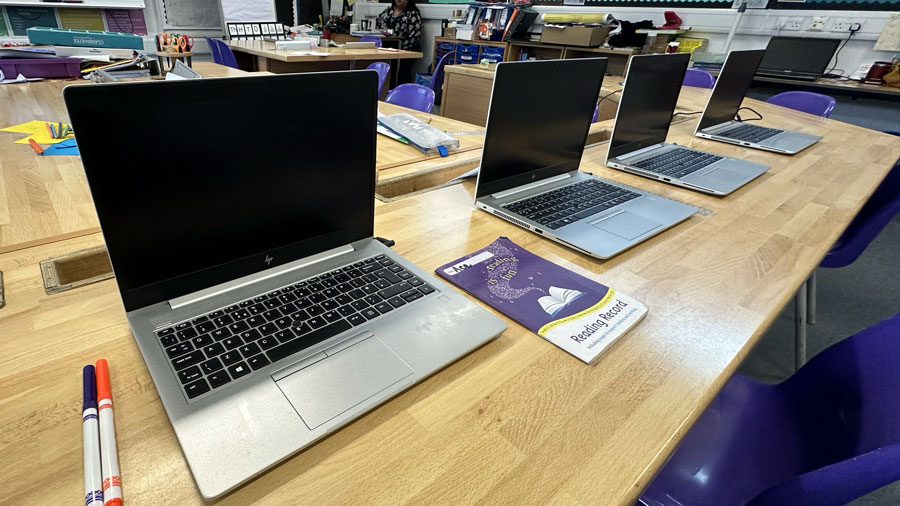
AI is rapidly becoming part of the education conversation. From personalised learning and classroom tools to administration and staff productivity, schools and colleges are being encouraged to think about how emerging technology could support teaching and learning.
This September, that conversation is becoming even more relevant. The government’s TechFirst programme is establishing a footprint across every region and home nation of the UK, helping young people develop technology skills and confidence with AI. Meanwhile, the Department for Education has recently updated its digital and technology standards for schools and colleges.
But before deciding which new AI-enabled devices to buy, there is a more fundamental question education leaders should be asking: Is our existing IT estate ready?
Start with the requirement, not the device
One of the most useful principles in the DfE's updated guidance is surprisingly simple: understand what students and staff actually need before deciding what technology to procure. The guidance recommends assessing how devices are being used, who uses them, where they are kept and the technical support required. It also specifically encourages institutions to consider whether existing devices can be repurposed rather than automatically replaced.
That matters as AI-capable hardware becomes increasingly prominent.
There will undoubtedly be users and courses where higher-performance devices make sense. Students working in areas such as engineering, design, data science or media may have very different requirements from someone accessing cloud applications, email and standard productivity software.
Giving every user the highest specification available is therefore unlikely to be the most efficient approach.
A better IT refresh starts by segmenting requirements: who genuinely needs new, higher-specification hardware, which users can be served by standard business devices, and which existing assets still have useful life?
That approach can significantly change the economics of a refresh.
Cybersecurity makes device management just as important as specification
Hardware performance is only one part of the picture.
The government's latest Cyber Security Breaches Survey found that just over one in four further and higher education institutions experienced a cyber breach or attack at least weekly. Among FE and HE institutions that identified a breach or attack, 49% experienced a negative outcome affecting their systems.
The DfE's standards consequently place considerable emphasis on centrally managed devices, security configuration, filtering, monitoring and keeping technology up to date. Schools and colleges are expected to be working towards six core digital standards by 2030, including cyber security, digital leadership and governance, filtering and monitoring, broadband and network infrastructure.
That makes visibility across the estate increasingly important.
Knowing that an organisation owns 2,000 laptops is not enough. IT teams need to understand where those devices are, who has them, their condition, whether they remain supported and when they should be refreshed. Without that visibility, ageing or forgotten devices can quickly become more than an accounting problem.
A refresh doesn't have to mean replacing everything with new equipment
The DfE's updated device guidance also puts sustainability directly into the procurement conversation.
Schools and colleges are encouraged to review existing and new devices, consider energy efficiency and take a sustainable approach to purchasing and disposal.
That creates an opportunity to rethink the traditional refresh model.
Enterprise-grade refurbished devices can be appropriate for many education use cases, particularly where students or staff need reliable everyday computing rather than the latest high-performance hardware.
Combining new and 2nd Life technology allows institutions to reserve budget for the areas where new specifications genuinely make a difference, while extending the useful life of existing technology elsewhere.
Think in refresh cycles, not one-off purchases
Budget remains one of the biggest constraints on education technology.
A large-scale device replacement can create a significant capital requirement at exactly the same time as institutions are investing in cybersecurity, connectivity, AI, software and other digital priorities.
Leasing changes that equation.
Instead of funding an entire estate upfront, schools and colleges can spread hardware costs across a defined period. That creates predictable payments and makes it easier to establish planned refresh cycles rather than waiting until devices become unreliable or unsupported.
More importantly, it encourages institutions to think about technology as a lifecycle.
Devices enter the estate, are managed throughout their useful life, refreshed when appropriate and then securely returned, refurbished, redeployed or responsibly recycled. T
hat is very different from buying equipment and trying to extract as many years as possible from it simply because replacing it requires another large capital request.
The goal isn't more technology. It's better-planned technology.
The next few years will bring significant changes to education technology. AI will develop quickly, hardware requirements will evolve and expectations around cybersecurity and sustainability will continue to increase.
Trying to predict exactly what every classroom will need five years from now is difficult.
Building an IT strategy that can adapt is much more achievable.
That means understanding the estate you already have, matching device specifications to genuine user requirements, introducing new technology where it adds value and creating a structured refresh cycle that prevents ageing equipment becoming tomorrow's problem.
For schools and colleges planning their next IT refresh, the question therefore shouldn't simply be "What should we buy?"
It should be "How do we build an IT estate that can keep changing with us?"
InnoVent helps education organisations fund and manage technology throughout its lifecycle, combining new and 2nd Life IT, flexible leasing and asset management to create refresh strategies built around actual requirements rather than one-off hardware purchases.
Planning your next education IT refresh? Talk to InnoVent about building a more flexible approach to your device estate.
Related Blogs

AI Adoption in UK Law Firms: Why Device and IT Lifecycle Planning Matters
Discover how UK law firms can support AI adoption with secure devices, effective IT asset management and a flexible technology lifecycle strategy.

How charities can make device reuse part of their digital strategy
For charities, technology is more than an operational expense. It can support frontline services, improve digital inclusion and contribute to wider sustainability goals. This blog explores how a planned approach to IT refreshes, refurbishment and reuse can help charities make better use of their technology, manage budgets and keep suitable devices productive for longer, while creating both environmental and social value.

Barbell or Dumbbell - The right kit for the job
Higher spec doesn't automatically mean higher output. In the gym and in IT, the smarter question is what actually matches the work in front of you.